Chicken Week 2026: Here's How Restaurants Are Trying to Stand Out
When more than 350 restaurants start with fried chicken, the difference lies in how each one manages to turn it into its own unique offering. Chicken Week 2026 ...

Balancing flavors in professional cooking is not about softening everything or lowering the intensity. It is about making conscious decisions so that sweet, sour, salty, and spicy work together within a clear profile, with direction and consistency, even in high-volume and continuous service contexts.
A dish can be technically well executed and still feel flat, aggressive, or confusing. That's where balance becomes a tool for control, not an aesthetic idea. The goal is not to standardize the cuisine or stifle the chef's personality, but to achieve consistency without losing identity.
Balance is perceived in three key moments: the initial impact, the development in the mouth, and the aftertaste. When the diner identifies a clear idea of flavor, the dish works; when not, noise appears.
Sweet, sour, salty, and spicy act as fine-tuning "knobs":
Sweetness rounds out and softens the flavor notes, but when used improperly, it alters the dish's identity.
Acid adds clarity and freshness, especially to rich dishes, but too much of it can mask the flavors.
Salt defines and enhances flavor; when used properly, it adds precision; when used improperly, it causes fatigue.
Spiciness adds tension and length, but it's a sensation: if it's too strong, it blocks everything else.
Before making corrections, it is essential to define the intention of the dish: what should dominate and what should merely accompany. Working with a clear focus and controlled accents facilitates adjustments without disrupting the recipe. The diagnosis should always be made under real serving conditions (temperature, texture, and final assembly), adjusting one element at a time and documenting decisions so they can be replicated.
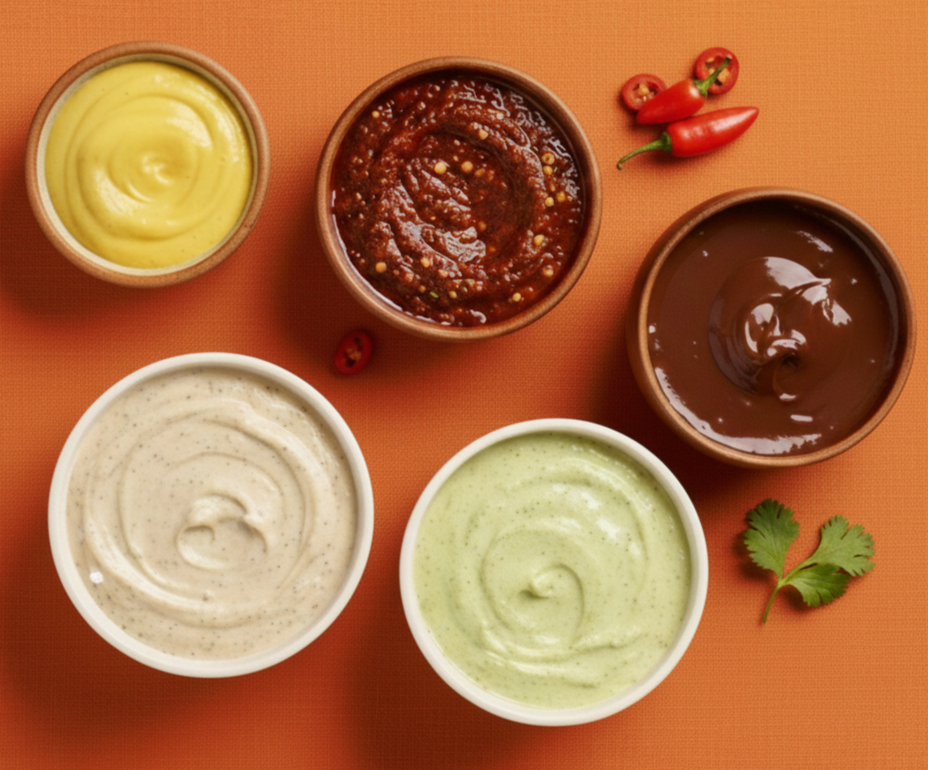
In this context, sauces play a strategic role. They serve as a flavor anchor, allow for quick corrections, help standardize results between different cooks, and maintain consistency without having to redo the dish. They should not cover up mistakes, but rather refine and organize the flavor profile.
Balancing flavors in foodservice is not about improvising. It's about designing a profile, maintaining it, and turning it into a replicable guide for the team. This way, consistency is no longer a daily struggle and becomes part of the kitchen culture, without sacrificing the chef's signature. That's why at Alimentos Delcasino we develop sauces that integrate naturally into any preparation, regardless of whether you're a chef or an entrepreneur, or the complexity of your ingredients. We guarantee flavor, consistency, and profitability so that your offering shines without losing its essence.
Because your creativity takes center stage; our sauces are made to enhance it.