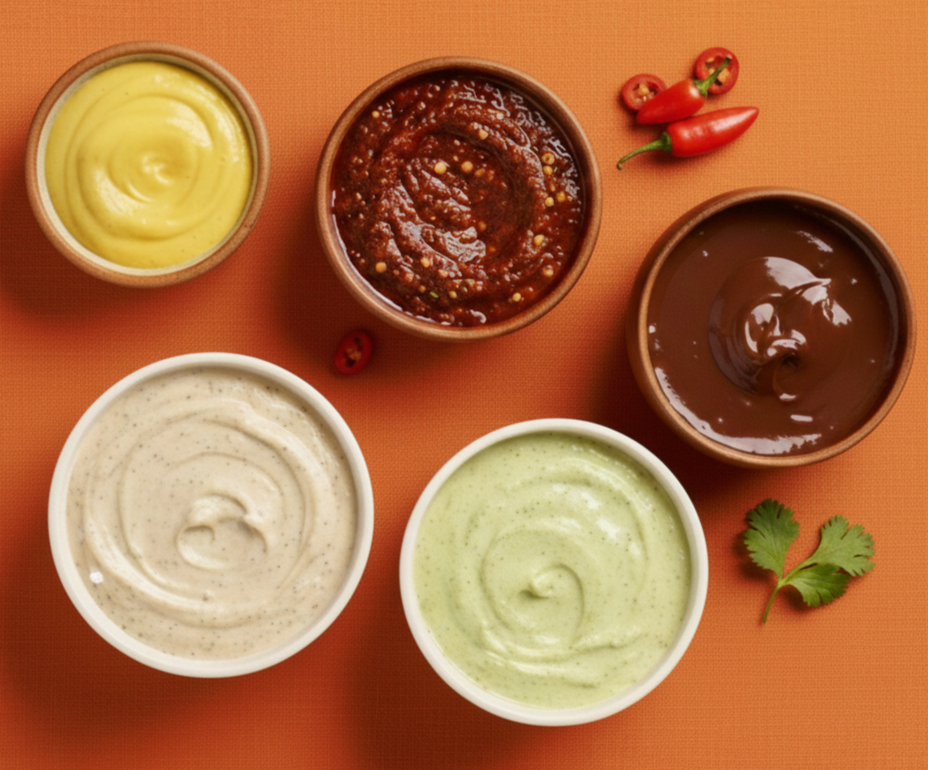
How to balance flavors in your professional recipes with our sauces
Balancing flavors in professional cooking is not about softening everything or reducing intensity. It's about making conscious decisions so that sweet, sour, salty, and pi...

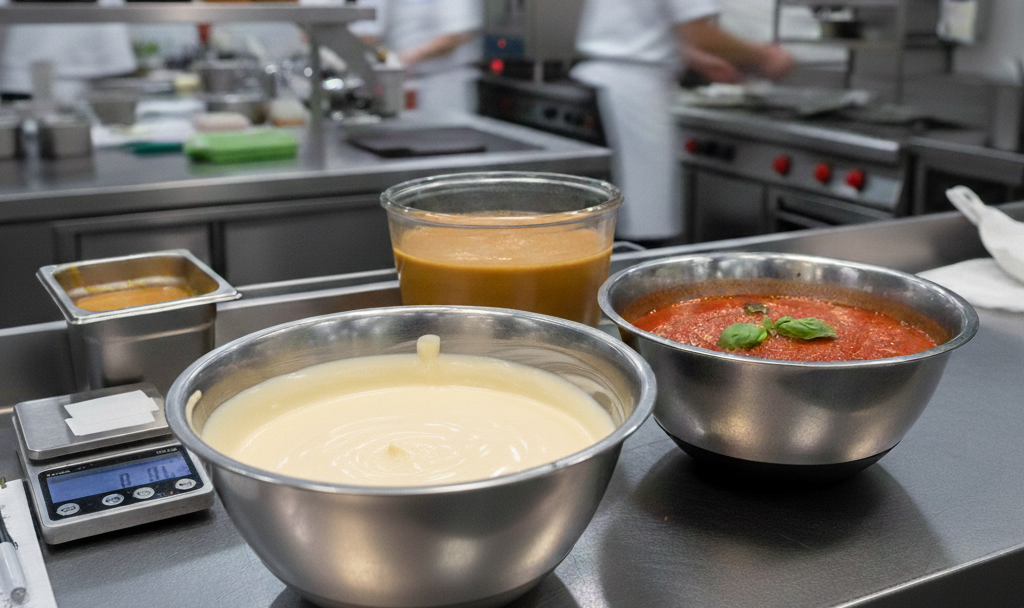
Because 20 minutes isn't just time: it's direct labor, pressure during peak hours, line saturation, and, above all, variation. Variation in seasoning, texture, yield, and portioning. A silent cost that isn't always clearly reflected in the monthly figures, but is felt every day in the operation.
In practice, this variation leads to delays in serving, improvised adjustments "by eye," and difficulty in maintaining the same result when the cook changes or the volume increases. That's where a well-defined base sauce ceases to be a shortcut and becomes a real tool for control and profitability.
Twenty minutes sounds insignificant. Until you look at them from the reality of a kitchen in full service.
In this article, you will find:
For operational purposes, a base sauce is a standardized mother preparation that serves as a starting point for various recipes on the menu. It is not necessarily a finished sauce ready to be used in all dishes. It is an engine that allows for quick and controlled finishes.
A good base is designed to be adaptable: adjust acidity, increase or decrease spiciness, modify body, or add freshness at the end. For it to work in a restaurant, it needs four clear things: stable flavor, controllable texture, predictable yield, and easy portioning.
When a foundation fails, it is almost always for the same reason: it is too specific, it does not have clear technical specifications, its useful life is not well defined, or there are no control points. The goal is not to cut corners for the sake of cutting corners, but to eliminate repetition without losing control of the final result.
Think about making mayonnaise from scratch: separating and measuring ingredients, emulsifying the oil and egg correctly, developing flavor, adjusting, straining, cooling, storing, and cleaning. These basic steps, repeated several times a day, take more time than they seem and, if not done properly, can result in curdled mayonnaise and wasted effort. That's where a well-defined mayonnaise base ceases to be an improvised resource and becomes a practical way to gain control, consistency, and rhythm in the kitchen.
The savings come not only from "doing it faster," but also from eliminating microtasks scattered across different stations. In service, the difference is quickly noticeable: less downtime, faster pace, and fewer returns due to variations, which are among the most expensive costs there are. A simple way to measure this is to use a real stopwatch for a week, before and after. Then the minutes are no longer a matter of opinion.
This is where those 20 minutes really matter. Twenty minutes per recipe, multiplied by several preparations per day and per shift, easily add up to full hours.
That recovered time can be used to get ahead on critical mise en place, improve assembly, reinforce cleaning during service, or limit overtime when volume increases. It also reduces friction between shifts and speeds up training: the standard is no longer stored in the head of a single person but is transferred to a clear document.
Useful indicators for assessing impact: overtime, hourly tickets during peak times, number of reworks, and pass stability.
Consistency is not just a branding issue, it's a cost issue. When a sauce varies, returns, improvised adjustments, and inventory consumption increase.
The key is to define what is standardized and what is left flexible. The base must have clear ingredients, yield, texture, and salinity. The personality of the dish lives in the finish: final acidity, level of spiciness, herbs, dairy touch.
Simple tools work best:
Short technical specifications, numbered procedure, objective photo, and defined portioning. In operations with multiple locations, this logic reduces variation without making the system cumbersome.
Margin is not protected by good intentions, it is protected by control. And control is often broken in four ways: unstable ingredients, overwhelmed labor, shrinkage, and reprocessing.
A base sauce helps because its yield is predictable and portioning leaves less room for guesswork. Although the unit cost may seem higher on paper, the actual cost per dish, including time and waste, is usually more stable.
The recommendation is clear: include the sauce (base and finishing) in the cost sheet and check it against actual consumption. If it doesn't add up, it will be detected quickly.
A well-designed base sauce reduces repetitive minutes, lowers variation, and improves operational control. It's not about speeding up for the sake of speeding up, but about building a more predictable kitchen with less friction and more defensible margins.
Practical action: choose a frequently used sauce, measure times for a week, standardize the base, and review results. If the system is well set up, the impact will be quickly noticeable: in the service, in the team, and in the margin, dish by dish.
A well-designed base sauce is an operational tool that directly impacts efficiency, consistency, and cost control in the kitchen. At Alimentos Delcasino, we develop base sauces aligned with these needs, designed to integrate into different operating formats and facilitate more orderly and predictable work.
When the foundation is well defined, standardization ceases to be a limitation and becomes a real support for profitability and service quality.